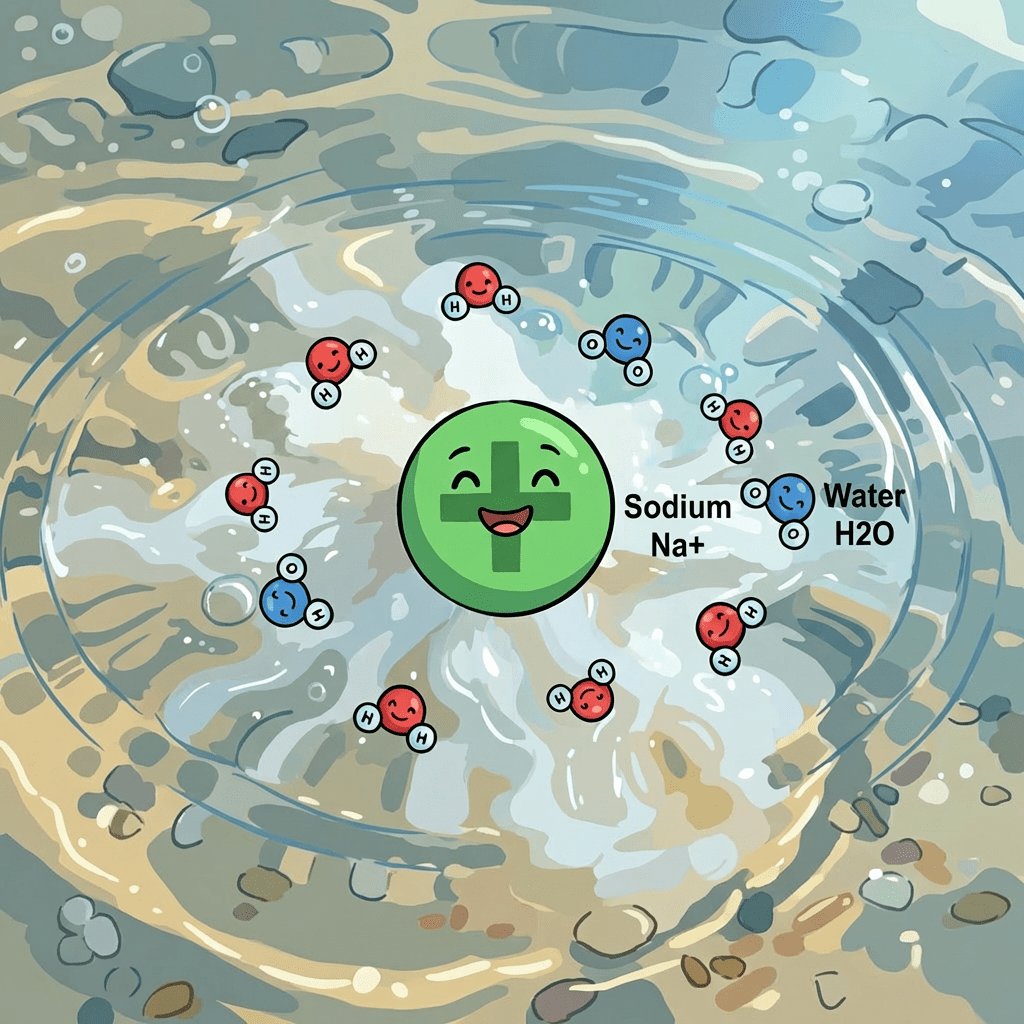
Your body is always balancing two things: how much water you have and where that water lives. Most people think of hydration as “drink more water.” But fluid balance is more complex. It’s a conversation among your kidneys, your hormones, your blood vessels, and the salt inside your bloodstream. When that conversation gets disrupted, even a little bit, you feel it. And sometimes you really hate that feeling…
“Your body is a tide. Constantly balancing and adjusting and always trying to keep you afloat.” – C
How Salt Actually Works in Your Body
Salt (Sodium or Na) isn’t the enemy. Your body needs it to:
- Move water in and out of cells
- Keep your blood pressure stable
- Help nerves and muscles fire correctly
- Support normal heart rhythm
Sodium’s job is to pull water toward it. Wherever sodium goes, water follows. This is why salty meals make you feel puffy, and why low sodium can make you dizzy or lightheaded.
Why You Feel Puffy After Eating Salt
When you eat a salty meal, sodium levels in your bloodstream rise. Your body responds by:
- Holding onto more water
- Expanding the volume of fluid in your blood vessels
- Shifting water into tissues (hands, feet, face, belly)
This is why your rings feel tight. Your face looks swollen in the morning. Your ankles puff up after a long day.
Imagine you eat takeout pizza at night… (and we’ve all done this) salty cheese, cured meats, a thick crust. Within an hour, the sodium in that meal pulls water out of your cells and into your bloodstream. Your body does this to dilute the salt, but the trade‑off is a temporary rise in blood volume. As you sleep, your kidneys work to filter the extra sodium. They can only move so fast. Some of that water shifts into your tissues.
By morning, you notice puffy fingers, a swollen face, or a bloated belly. Once your kidneys finish clearing the sodium over the next 12–24 hours, the extra water follows, and the puffiness fades. It’s simply your body balancing salt and water the way it’s designed to
It’s not “weight gain”, it’s fluid redistribution
Why Low Salt Can Make You Dizzy
People rarely talk about the other side of fluid balance: not enough sodium.
Low sodium can happen when you:
- Drink a lot of water without electrolytes
- Sweat heavily
- Take certain medications
- Have vomiting or diarrhea
- Restrict salt too much
When sodium drops, water moves into cells instead of staying in your bloodstream. This lowers your blood volume and can cause:
- Dizziness when standing
- Fatigue
- Headaches
- Nausea
- Brain fog
This is why athletes, people who work outdoors, and people with low blood pressure often need more salt, not less.
How Your Kidneys Keep You Balanced
Your kidneys are constantly adjusting:
- How much water you keep
- How much sodium you excrete
- How concentrated your urine is
Hormones like ADH and aldosterone help fine tune this balance. When something disrupts the mechanism, stress, dehydration, illness, medications… you feel it quickly.
Signs Your Fluid Balance Is Off
Your body gives you clues:
- Puffy hands or feet
- Morning facial swelling
- Feeling “waterlogged”
- Headaches
- Dry mouth
- Dark urine
- Dizziness when standing
- Rapid heartbeat
- Fatigue
These symptoms don’t always mean something serious, but they do mean your body is asking for attention.
Simple Ways to Support Fluid Balance
These gentle steps help most people feel better:
- Drink water steadily throughout the day, not all at once
- Add electrolytes when sweating, exercising, or feeling lightheaded
- Eat potassium-rich foods (bananas, potatoes, leafy greens) to balance sodium
- Limit ultra-processed salty foods
- Elevate your legs if ankles swell
- Pay attention to how your body responds to different meals
Fluid balance is personal. Your needs change with weather, hormones, stress, and activity. Don’t forget that double bacon cheeseburger calling your name for lunch today…
When to Check in with a Provider
It’s worth getting evaluated if you notice:
- Swelling that doesn’t go away
- Shortness of breath
- Sudden weight changes
- Severe dizziness
- Confusion
- Very low or very high sodium levels on labs
These can be signs of underlying medical conditions that deserve attention
Salt and water aren’t opposites… they’re partners. Your body is constantly adjusting them to keep you steady, upright, and functioning. When you understand how that balance works, your symptoms start to make sense. Your body feels less like a mystery and more like a conversation you can join in.
 The Patient's Notebook
Leave a comment